 In 1860, in the town of Worksop, a remarkable boy was born.
He would live for one hundred and two years, become a doctor in Manchester, a surgeon in the Boer War, he'd fight David Lloyd George over medical insurance rights, set up the Volunteer Medical Staff CORPS, found the British Red Cross Society in East Lancashire and help draw out the Territorial Army as we know it today.
His name was William Coates – later known as Colonel Sir William Coates – and he was the founder of Broughton House.

Hospitals across the North West were overflowing with casualties. Each day an average of 6 ambulance trains brought more of the wounded, the sick and the disabled.
People were placed in schools and even houses. It wasn't enough.
Coates had been organising hospitals across the North West since the war began and saw there was a crisis at hand. He began the search for new medical accommodation.
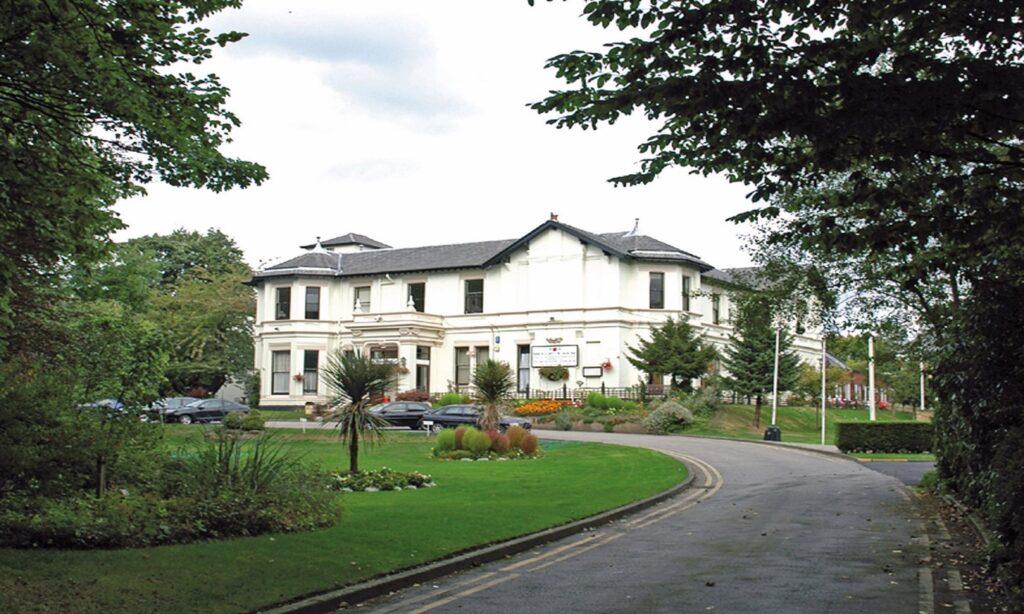
The first home he chose was an old merchant's villa near central Manchester, large enough to accommodate 40 to 50 beds, near enough for relatives to visit. It was perfect.
There was just one problem: paying for it.
Raising money in a time when resources were being squeezed, Britain was borrowing from the U.S. and families were cutting down was a tall ask. Luckily Coates didn't have to do it alone. The Mayor of Manchester and the Earl of Derby had already formed a charity to drum up donations. Working with them, Coates wrote a letter to the press in September 1916 and helped launch an appeal.
The appeal worked and within a few weeks, Coates and his partners had managed to raise enough money to purchase Broughton House by the end of September.
This generosity would be something Broughton House would come to rely on throughout its life. With the money settled and the beds in place, the house could welcome its first resident.
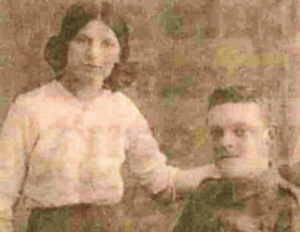
Private Charlie Fox was in Ypres when he received an injury that would change his life.
Ypres was deemed a place of strategic importance, bombarded and attacked, captured and recaptured - taking countless lives. More came to follow as Charlie joined the ranks.
The Germans were on the offense for months, with perpetual gunfire, shelling, and poisonous chlorine gas.
As his comrades were being killed around him, Charlie was caught by shellfire and his legs were shattered.
The field hospitals treated him as best they could but it was clear Charlie could not go back to Ypres.
He was ferried back across the channel and taken up to Salford, where Broughton House awaited.
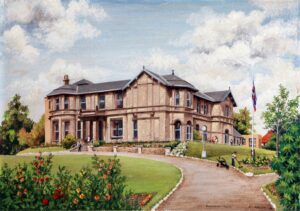
As the war raged on, so too did the fundraising efforts to purchase and adapt enough homes for the injured soldiers. In October 1917, the target amount of £100,000 had finally been reached, and the East Lancashire Disabled Sailors and Soldiers Homes charity had enough money for four additional homes.
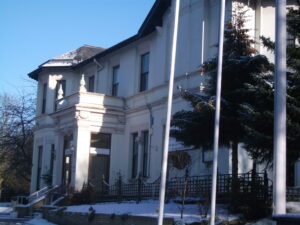
Broughton House struggled on to care for its men, and in 1945, just before VJ day, income exceeded expenditure for the first time for many years. All 52 beds were occupied and there were strong appeals from the War Office for more to be installed.
Peace brought a new influx of men disabled by war as families realised that they could not care for them at home as they had hoped. The staff became aware that they faced more stresses than those in hospitals because most of residents could not look forward to a complete recovery.
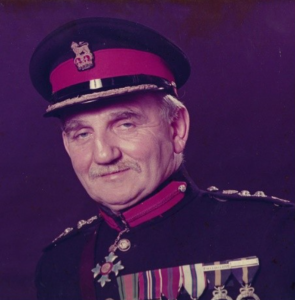
In 1977, the Home’s Chairman, Colonel Donald Gibbs, CBE. TD. JP. DL. decided that he would give up his civilian career and devote his time to improving Broughton House by becoming its seemingly tireless Chief Executive.
His long tenure in office transformed the Home in every way, turning fundraising into such an art that more than £2 million was raised and spent on extensions and other improvements.
From a small beginning with just two medals, he and Museum Officers Captain David Brown and Ken Maguire created a magnificent display of medals and military memorabilia donated by the public. The legacy of the Broughton House Museum still thrives to this day, and is the first thing visitors see when they enter the Home.
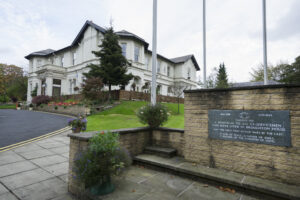
A tremendous milestone was reached in 2016, as Broughton House reached its centenary.
And as the charity celebrated 100 years of service, plans were in hand for a major redevelopment of the site. The old Victorian building had become unsustainable, both commercially and operationally, to meet the needs of a modern care provider.
To enable a sustainable future and to become relevant to the entire armed forces community, the charity embarked on the creation of the Nation’s very first Veterans Care Village.
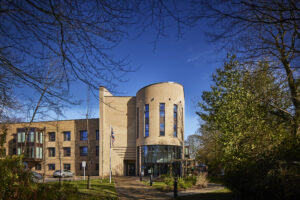
Since 2016 the charity had secured £8m in donations and fundraising initiatives. Plans for the redevelopment were submitted to Salford City Council in July 2017 and approved in September 2017.
Work began in 2018 and the first phase of 32 ensuite bedrooms, central kitchen, household lounges with their own kitchens, central Veterans' Mess, gym, reception, and offices were ready in September 2020.
The grand old house was demolished in 2021 and the second phase of another 32 ensuite bedrooms and 6 individual apartments was ready for residents in November that year.